Conspicuous Consumption in the Market for Smartphones Journal Article Peer Reviewed

A Study of Consumer Repurchase Behaviors of Smartphones Using Artificial Neural Network
Department of Industrial and Management, Kyonggi University, Suwon, Gyeonggi 443760, Korea
Received: half-dozen August 2020 / Revised: 17 August 2020 / Accepted: 18 August 2020 / Published: xix August 2020
Abstract
This study analyzed consumer intention to repurchase a smartphone, using an analysis of previous research and suggesting this every bit a research model. To this terminate, factors influencing "intention to repurchase" the smartphone were derived as social influence, consumer satisfaction, emotional loyalty, and addiction. In addition, statistical assay was conducted to investigate consumer repurchase intentions and the causal relationships. Information technology is likewise possible to investigate whether consumer habits are linked to repurchases by analyzing their psychological inclinations; therefore, in this study, 390 people who repurchased a smartphone over the past two years were surveyed, and data were collected. This study analyzed the causal relationships amongst the factors using SPSS 24.0. Moreover, the causal human relationship assay was enhanced using the artificial neural network (ANN) algorithm. With multiple regression analysis and the ANN algorithm, consumer satisfaction (0.71), emotional loyalty (0.108), and social influence (0.062) were determined to impact the intention to repurchase. This means that the ANN algorithm tin can be used over multiple regression analysis and improve the results of the analysis. In improver, this study also provided practitioners with a way to improve their understanding of consumer behavior intention to repurchase smartphones.
1. Introduction
1.1. The Business Phenomenon
Google Insight and the global market research firm CCS predicted that 1.six billion smartphones would be sold in 2016, with an increase to two billion sold by 2019. Southward Korea has the highest smartphone penetration rate at 92%, followed by Nippon (64%), Federal republic of germany (75%), the Us of America (United states of america) (78%), and the United Kingdom (United kingdom) (77%).
With the penetration rate of smartphones being so high in the Korean market, it is more constructive to motivate existing consumers to repurchase rather than to focus on new consumers and markets. According to Table 1 [1], smartphones (especially Samsung) have a very high marketplace share, only consumers prefer to repurchase Apple'due south iPhone over Samsung's Galaxy.
Companies ofttimes pay big amounts of money to increase customer loyalty and lure customers away from their competitors. Verizon, a leading United States (United states) telecommunications service provider, launched an unlimited programme equally an aggressive marketing strategy to secure customers from competitors [2]. Other providers in the same manufacture, including T-Mobile, AT&T, and Sprint, offer smartphone installment plans and early termination fees to customers who switch from competitors to their services instead. Beyond that, many smartphone manufacturers offer marketing promotions that greatly reduce the purchase price of smartphones when customers sign up for more than than two years of service through alliances with mobile communication service providers. In that style, each company actively implements marketing strategies in mature markets to protect their customers and attract those of competitors. After all, companies know that retaining existing customers is more profitable than finding new ones. Added to that, companies' repurchase strategies often revolve around event promotion. Although all of those strategies tin can temporarily increase sales, there is a limit to maintaining sustainability. Therefore, companies carry enquiry on the capacity of diverse marketing strategies to prompt repurchases among existing customers. With advanced technology, consumers can hands find the products and services they want; however, from a business concern standpoint, differentiation is becoming more than challenging. It is very difficult to create and provide products or services that are superior to competitors and that cannot be imitated in the bodily business organisation market. As a issue, many companies must compete fiercely within the aforementioned market place for consumers. In a saturated market, marketing costs often focus on retaining existing consumers rather than new ones; therefore, many companies recently adopted marketing strategies to secure their make loyalty. It is very of import to maintain consumer loyalty in order to increase profits in such a competitive market situation; inquiry shows that, if the service industry reduces its consumer bounce rate past five%, profits will increment by 25–85% [3]. In other words, from a marketing standpoint, research indicates that managing relationships with existing consumers is more efficient than attracting new consumers and that consumer loyalty is positively related to corporate profit [4,5].
Smartphones have a faster repurchase cycle than other electronic devices; consumer-friendly smart devices (like smartphones) have a lifecycle of only 2.77 years [6]. Because smartphones are used more ofttimes and consumed more rapidly than other electronic devices, it is very important to clarify the factors affecting repurchase intention of this production with a short repurchase cycle. Thus, this study analyzes factors affecting the repurchase of smartphones by South Korean consumers, using the bogus neural network algorithm.
1.2. Inquiry Questions
The enquiry began with the following questions: "Why practice consumers repurchase smartphones?" and "What factors touch consumer behaviors of smartphone repurchase?" Thus, this study examined the repurchase factors that influence consumers when they repurchase a smartphone, through the following questions:
-
What are the factors that affect smartphone repurchase?
-
How does consumer recognition of smartphone make relate to consumer satisfaction and purchasing habits (continuous intention to use)?
-
What exercise the quality and ease of utilize, equally perceived by consumers, have to do with consumer satisfaction and purchasing habits?
ii. Theoretical Groundwork
2.ane. Theory of Reasoned Action (TRA)
Ane of the well-nigh of import areas of consumer psychology and behavior enquiry is the human relationship between consumer attitudes and behaviors. One theory explaining consumer attitudes and intentions to use a production is the theory of reasoned action (TRA). The TRA suggests that consumers carefully consider the consequences of various behaviors before acting [7]. In other words, consumer beliefs is under voluntary control; thus, consumer behaviors can be predicted via their intentions [7]. In add-on, the TRA considers subjective norms, in comparison with other models that explain consumer attitudes. Consumers consider the costs of performing their deportment and the benefits that may arise every bit a result of the action before choosing the activity that is the well-nigh benign/least plush [8,9].
2.2. Heuristics Theory
Heuristic thinking refers to intuitive thinking through experience, rather than analyzing conclusions based on rational thinking [ten]; in other words, information technology involves bias. A heuristic involves satisfaction with "bounded rationality" rather than pursuit of an impossible real rationality [11]. According to heuristics theory, many consumers make decisions based on habits, beliefs, or by post-obit others' decisions, as these approaches are simpler and avoid complications.
This study adopted the heuristics theory as a basis from which to study consumer habit.
ii.3. Artificial Neural Network (ANN)
An artificial neural network (ANN) can be divers as an array of highly connected bones processors called neurons. As shown in Figure 1, the multilayer perceptron (MLP) has the same hierarchical construction as a neural network, with at least one intermediate layer between the input layer and the output layer. The MLP has a construction similar to a single-layer perceptron, but it improves the network ability by nonlinearizing the input and output characteristics of the intermediate layer and of each unit, thus overcoming the various disadvantages of the single-layer perceptron. In other words, as the number of layers increases, the properties of the MLP are more than enhanced [12].
X1, Tentwo, and X3 accept weights W1, W2, and Wiii associated with these inputs. The output Y of the neuron is calculated every bit shown in Figure 2. The office f is nonlinear and is chosen the activation function. The purpose of the activation function is to innovate nonlinearity into the output of a neuron, which is important because near real-world data are nonlinear [12].
In mathematical terms, the neuron k depicted in Figure 3 tin can be described past the post-obit equations:
where φ() is the activation role,
is the linear combiner output for the input signals,
is the bias, and
is the output signal of the neuron [12].
3. Literature Review
3.ane. Intention to Repurchase
Researchers give a great deal of attention to consumer intentions to repurchase. Henkel et al. (2006) concluded that satisfied consumers have increased service usage levels and increased intentions of future usage [13]; moreover, while examining the importance of satisfaction, Cronin, Brady, and Hult (2000) discovered that consumer satisfaction and repurchase intentions can exist increased by offering added value and quality services [xiv]. Repurchasing and the factors that influence it were investigated by many scholars [15,16,17,18,19,20]. Repurchasing behavior is defined as a consumer's actual beliefs of purchasing the same product or service on more than one occasion. The majority of consumer purchases are repeat purchases [21]. Consumers often repeatedly buy similar products from like sellers, and near purchases represent a series of events rather than a single isolated event. Retention is another mutual term for repurchase [22,23,24], which is considered to exist ane of the most of import variables in human relationship marketing [25]. Repurchase is the actual behavior of the consumer; however, intention to repurchase is defined as the consumer'southward determination to participate in future activities [26].
3.two. Factors Causeless to Affect the Intention to Repurchase
Information technology tin be inferred that keeping existing consumers is more important than attracting new consumers in a competitive surroundings such equally the smartphone market place. Most marketing inquiry focuses on consumer satisfaction and consumer intention to use products and services, with the assumption that consumer satisfaction indicates repurchase. However, it is essential to report a multifariousness of consumer behaviors in society to more comprehensively understand consumer repurchase behaviors; therefore, it is necessary to examine factors that deviate from consumer satisfaction-centered repurchasing research. Thus, this study analyzes other factors affecting intention to repurchase.
3.three. Consumer Satisfaction
Oliver (1997) institute that consumer satisfaction differs from the joy experienced when purchasing products or services [27], and their expectations were predictable to be better than their experiences. In addition, the study found that consumer satisfaction is reflected in the evaluation of one's emotions about a product or service. Rust, Zahorik, and Keiningham (1995) showed that consumer satisfaction (a consumer'southward willingness to revisit or recommend) has a strong impact on loyalty [28]. They too plant that consumer satisfaction is influenced by diverse aspects (product, service quality, shop attributes, and corporate marketing activities). Wen et al. (2011) suggested that satisfaction positively affects online repurchase intention [29].
3.4. Social Influence
Social influence is regarded every bit a disquisitional element in decision-making past people in sociology and in behavioral science. In this study, social influence refers to the extent to which people's social networks influence their behaviors [30]—i.e., the ways in which a person's beliefs, attitudes, thoughts, and actions modify equally a result of their social interactions [31]. This definition is rooted in social influence theory.
The TRA [7,nine] suggests that a person's behavioral intentions depend on their attitude toward the behavior, along with other subjective norms. A subjective norm is the influence had past the people in one'south social surround on one'southward behavioral intentions (i.e., the perception of whether people who are of import to them think that they should perform the behavior in question). The concept of subjective norms greatly influenced the formation of the measures of social influence in these two models, as well equally many other studies. Venkatesh and Davis (2000) believed that, in voluntary settings, social influences are more likely to operate indirectly through commonsensical outcomes [32].
Currently, discussion of oral fissure—a form of social influence—every bit a marketing communication strategy is famous and globally characterized as a price-constructive and persuasive promotional tool [33].
three.5. Emotional Loyalty
Law, Hui, and Zhao (2004) [18] used Oliver's definition of loyalty equally "a deeply held commitment to rebuy or repatronize a preferred product/service consistently in the future, thereby causing repetitive same-make or same-brand-set purchasing, despite situational influences and marketing efforts having the potential to cause switching behavior". In other words, they viewed loyalty as a consumer attitude rather than a consumer behavior. Behavioral loyalty is solely viewed as a repurchase of the product or service. Dixon et al. (2005) found that loyal consumers are expected to consistently repurchase despite competitive efforts [34]. Emotional loyalty is the ultimate blazon of loyalty, in which consumers choose a particular brand because they accept a personal connection with the brand, regardless of price, convenience, or other external factors. Attractive looks, novel materials, and atypical design technology bring positive emotions to consumers, thereby providing emotional value to them.
Arruda-Filho et al. (2010) recruited iPhone users for interviews and conducted a netnographic assay that showed consumers may experience social value due to the possession and apply of smartphones [35]. They found that consumers may retrieve of iPhone ownership as a symbol of luxury and high social status [35]. In add-on, sharing the experience of using smartphones also helps consumer interpersonal relationships. When consumers perceive higher social value from a production/brand, they bear witness greater brand loyalty behaviors, such as disseminating positive information and paying premium prices [36]. Pihlström and Brush (2008) revealed that, when consumers perceive greater emotional value in a product/brand, they show more than brand loyalty—every bit measured past repurchase intentions, willingness to pay, and positive word of mouth [37].
3.6. Addiction
Because repetition is a central characteristic of everyday life, habit research is of import for understanding consumer behaviors. Approximately 45% of people'southward behaviors are repeated almost daily, usually in the same context [38]. Chiu et al. (2012) and Limayem and Cheung (2007) found that consumers tend to purchase products habitually [39,twoscore].
Studies by Anderson and Sullivan (1993) and Jones and Sasser (1995) emphasized the need for all-encompassing research on repurchase intentions [v,41]. In particular, research on consumer psychology actively seeks to secure long-term competitive advantages through favorable relationships betwixt companies and consumers. In a number of previous studies, researchers suggested that, when consumer satisfaction (consumer empirical operation) increases with superior quality of products and services, consumers are more willing to return for purchase. Therefore, companies tin look to increase their sales and institute a audio consumer base past getting consumers to repurchase. Despite the importance of the intention to repurchase, nigh research focuses on consumer satisfaction, merely one factor of that intent.
4. Enquiry Hypotheses and Research Model
4.1. Research Hypotheses
Early studies of consumer behavior explored the relationship between repurchase and satisfaction; even so, this human relationship is non straightforward. Fornell (1992) studied positive correlations between consumer satisfaction and consumer retentiveness [42]. Wen et al. (2011) found that satisfaction had a positive consequence on online intention to repurchase [29]. Tsai, Huang, Jaw, and Chen (2006) discovered that satisfied consumers were more probable to continue their human relationship with a particular arrangement than dissatisfied consumers [43]. This view is supported by many researchers [19,22,41,44,45,46,47,48,49,50]. Withal, Mittal and Kamakura (2001) plant that the satisfaction–repurchase relationship could be disrupted due to iii principal reasons [19]. Additionally, Olson (2002) revealed that, despite the general view that satisfaction is associated with repurchase, few empirical studies associated satisfaction with bodily repurchase behavior [51].
Kamakura (2001) pointed out that establishing a directly link between satisfaction assessment and repurchase behavior is not easy for many organizations [19]. In addition, the satisfaction–repurchase human relationship can exist influenced past various characteristics of the consumers. Despite equal ratings given on satisfaction, repurchase beliefs differed significantly, which was attributed to differences in consumer age, instruction, marital status, sex, and residential area [nineteen]. Many factors complicate satisfaction–repurchase relationships. The trouble is that researchers practise not consistently define the relationship across studies, which tin can be operationalized as behavior, attitude, or complex [52].
Consumer satisfaction tin can occur during different stages of the shopping process (before, during, and after), during the purchase of dissimilar types of goods (convenience, shopping, and specialty) [53], and in a traditional or online setting. In addition, different types of consumers exist [54], and they all have varying levels of cognition almost the product [55], which affects their level of satisfaction.
Understanding the importance of a comprehensive review, the study attempts to summarize previously reported findings in order to explain the complex relationship between satisfaction and repurchase. Cognition of consumer satisfaction and their repurchase behavior will improve companies' ability to develop more effective marketing strategies in the future [56]. Previous studies demonstrated that overall consumer satisfaction with services is strongly related to behavioral intent to reuse the same service provider [57]. Therefore, in this study, the following research hypothesis is established:
Hypothesis ane(H1).
Consumer Satisfaction Positively Impacts Intention to Repurchase.
This work also studies the importance of social influence on repurchase intentions [58]. Social influence refers to actions, feelings, thoughts, attitudes, or behaviors related to private modify through interaction with other individuals or groups. In social psychology, it is often associated with the touch on of social norms on changes in personal behavior and attitudes [59]. Purchase decisions are related to the need to be respected, and social value is derived past acquiring desirable social status [60]. Some observations were made that consumers exercise not shop lone. Peers, families, and other groups strongly influence individual purchasing decisions. These reference groups practise word-of-oral fissure marketing and can play an active role in influencing the opinions of others. That influence is sometimes negative or positive in terms of the interests of certain organizations [61].
Hypothesis 2(H2).
Social Influence Positively Impacts Intention to Repurchase.
Emotional loyalty is behaviorally expressed by retention [59]. Furthermore, customer loyalty is well recognized as a significant driver of repurchase intention in the online marketing literature [62].
This emotional and affective connectedness influences consumer beliefs (retentiveness, brand repurchase, positive give-and-take of oral fissure) [63]. Brand loyalty is expressed as a tendency to continuously purchase the aforementioned make [64].
Repurchase intentions are mostly tied with make commitment, but at that place is an important difference betwixt them. Brand commitment refers to the connectedness a consumer establishes with a brand, whereas repeat purchase is the purchase of a make because it is relatively cheaper [65].
Loyal customers are the faithful consumers of a brand who perform repeat purchases and recommend the make to those around. Firms want their customers to be attached to their brands by strong feelings. Client satisfaction must exist fulfilled for this kind of loyalty. When customers are satisfied, they show commitment to continually buy the same brand and become loyal [66].
Consumers who are committed to the brand become loyal consumers and show consistent repurchase beliefs [67]. Therefore, loyalty may touch on consumer repurchase behaviors [68]. Repurchase intentions are usually identified through brand commitment, just there are significant differences between the 2 concepts. Brand commitment ways a similar human relationship to the attachment that consumers develop for the brand. Therefore, in this study, the following research hypothesis is established based on previous studies:
Hypothesis 3(H3).
Emotional Loyalty Positively Impacts Intention to Repurchase.
Enquiry on habits is important for consumer beliefs because repetition is a central characteristic of daily life. Near 45% of people'due south behavior is repeated almost daily and usually in the same context [69,70].
Prior inquiry comparing TRA and related theories with habit as an ancestor of behavioral intentions showed that habit directly affects behavioral intentions [71,72,73]. Gefen (2000) noted that habitual previous preference to use an online shopping website direct and strongly increased user intentions to continue using the same online shopping website again [74]. Support for the role of habit in repeat purchase intention was provided by Gefen (2000) and Rauyruen and Miller (2009) [74,75].
Habitual behavior exhibits that repurchase is motivated by habit or routines that are facilitated in the decision-making process [76].
Khare and Inman (2006) realized that consumers either buy the same brand repeatedly or only try new product types within the same brand, depending on the situation [77]. Research also institute various types of habitual purchase patterns, such as purchasing diverse trademarks habitually according to one'due south values [77]. Consumers tend to buy the same brands of products across different shopping experiences (e.g., Seetharaman, 2004) [78], purchase the same amounts at a given retail shop beyond repeat visits [79], and eat similar types of foods at a meal each twenty-four hour period (east.g., Khare & Inman, 2006) [77]. Thus, repetition—and, more specifically, habits—may characterize a significant segment of consumer behavior that tin can be linked to important marketing outcomes [38].
Anshari et al. (2016) examined the effect of habit on smartphone usage [80]. They found that in that location is a strong relationship between habit and smartphone usage. As there is a positive issue of addiction on consumption behavior and smartphone usage, nosotros think that there may also be a similar i between make loyalty and re-buy intention. Therefore, in this study, the following research hypothesis is established based on previous studies:
Hypothesis 4(H4).
Consumer Habit Positively Impacts Intention to Repurchase.
4.2. Research Model
Previous inquiry analyses suggested the research model and its components shown in Figure 3. To examine the experiences of consumers using the same brand of smartphone, the research model was developed based on 5 factors (consumer satisfaction, social influence, emotional loyalty, habit, and intention to repurchase). Relying on the research model, the analysis examined the furnishings of social influence, consumer satisfaction, emotional loyalty, and habits on the intention to repurchase smartphones.
five. Methodology for Data Collection, Data Analysis, and Measurement
5.one. Data Drove and Sample Size
To analyze the enquiry model, this study collected data on intention to repurchase through surveys for consumers living in Republic of korea. Co-ordinate to the Pew Research Center (2018), a global market research organization, the country with the highest smartphone penetration rate is South Korea, with 94% of the population using smartphones [81]. Therefore, Southward Korea is a practiced market in which to clarify the characteristics of consumers who repurchase smartphones.
Although questionnaires were distributed to 1200 customers, only 390 responses were received and analyzed in order to test the hypotheses, as now mentioned in Section v.1. Three hundred ninety consumers (northward = 390) who repurchased smartphones within two years were included in this investigation. The study tested the inquiry hypotheses and attempted to answer the research questions by developing a questionnaire as its research musical instrument. The items of each construct were adopted from previous literature. All of the items were measured on a five-indicate Likert scale, where 1 = strongly disagree and 5 = strongly agree. This study calculated the appropriate sample size for the assay inside the level statistical significance; in consideration of the current full population of South Korea, the smartphone penetration rate, the confidence level (95%), and the margin of error (5%), the appropriate sample size could exist calculated as 385 people. Therefore, the sample (n = 390) in this study is an advisable size for data analysis.
5.two. Measurement
This report analyzed the behavior of consumers; for this, the research used verified measurement items found in an analysis of previous research. And the results were summarized in Table 2.
In this study, 33 items were developed for the questionnaire to address the characteristics of the consumers. The last questionnaire had 17 questions, developed through a pilot test of 78 consumers.
five.three. Assay
The descriptive statistics of the survey were analyzed using SPSS 24.0 to make up one's mind the means and standard deviations of the responses. A factor analysis and a reliability assay (Cronbach's α test) were conducted to analyze the validity and the reliability of the research variables. To clarify the causal relationship betwixt the variables, the regression analysis model was enhanced by artificial neural network algorithms.
6. Data Analysis
6.i. Descriptive Statistics
In this report, the results of the descriptive statistics of the survey are presented in Table 3.
Table iv presents the results that explain the characteristics of the respondents who participated in the survey. Male (49.5%) and female (fifty.5%) respondents participated in this survey in an equal ratio, and consumers who repurchased smartphones 2–v times in the final two years deemed for more than 80% of all respondents.
6.2. Factor Analysis
In this report, factor assay was based on the nerveless data. For factor analysis, maximum likelihood was used as the cistron extraction method, and oblimin with Kaiser normalization was used as a factor rotation method [89,90]. In improver, cistron analysis indicated that 17 observed variables could be clustered into five latent variables. The results of the cistron analysis in this study were validated through the Kaiser–Meyer–Olkin (KMO) test and Bartlett's test. The result of the KMO examination was 0.889, which suggests that the factor analysis was appropriate (Table 5).
Based on consumer information, the results of factor analysis included survey results grouped into v factors, and the reliability of the elements that course each cistron was adamant to exist excellent. The results appear in Tabular array 6.
6.3. Correlation Analysis
This written report analyzed the directionality of the factors through correlation analysis between the derived factors, as shown in Table seven.
6.4. Regression Analysis
Regression analysis was performed to analyze the linear causality between several independent and dependent variables in this report. The results are shown in Tabular array 8, Table 9 and Tabular array 10. The analysis was based on the stepwise method and was analyzed using SPSS 24.0.
Co-ordinate to the results in Table ix, the second research model was analyzed to be highly consummate, and the regression analysis results of this model are presented in Table 9.
Table 10 shows the results of analyzing the coefficients of the regression assay model variables.
half dozen.5. Assay of Research Model Using ANN (Relative vii:3, Number of Hidden Layers (Ane))
This study enhanced the analysis of the research model by using the ANN algorithm. To this end, with one hidden layer, 2 cases were analyzed separately. Table 11, Table 12, Tabular array thirteen, Table 14 and Table 15 are the results of analyzing the inquiry model bold one hidden layer. With the ANN algorithm, this study advanced the analysis of the research model.
Table 12 presents material that explains the method of analyzing research models with ANN. In the report presented here, a research model consisting of iv independent variables and ane dependent variable was subjected to multiple regression assay. In addition, the sigmoid office, which combines the node and weight of the hidden layer when transmitted from raw data to the hidden layer, was used as an active function in ANN. Beyond that, the softmax part was selected every bit an activation part for calculating the results from the hidden layer to the output layer.
In this research, when the number of hidden layers was ready equally ane under the ANN algorithm, the third research model was found to be the most complete model.
Model 3 (Table 16) determined that consumer satisfaction (0.621), emotional loyalty (0.125), and social influence (0.063) influenced intention to repurchase, unlike the other models. In add-on, it determined that consumer satisfaction had the greatest influence on intention to repurchase.
6.vi. Analysis of Enquiry Model Using ANN (Relative seven:three, Number of Hidden Layers (Two))
Table 17, Table eighteen, Table nineteen, Tabular array 20, Table 21 and Table 22 are the results of analyzing the research model by bold ii hidden layers in the ANN algorithm.
The analysis results of Table 21 show that the third research model was the most consummate when the number of subconscious layers was set to two under the ANN algorithm.
Model iii (Table 22) determined that consumer satisfaction (0.710), emotional loyalty (0.108), and social influence (0.062) influenced repurchase intention, unlike the other models. In addition, information technology determined that consumer satisfaction had the greatest influence on repurchase intention.
vii. Research Results
This study plant that consumer satisfaction positively affects intention to repurchase. In addition, it was adamant that emotional loyalty affects intention to repurchase. According to the multiple regression analysis, but customer satisfaction and emotional loyalty bear on intention to repurchase. In the original analysis, social influence did not affect intention to repurchase. This is due to the limit of this study, in that it did non consider the relationship betwixt each independent variable. Therefore, the stepwise analysis of variables was limited. To address these limitations, this study more than clearly analyzed the causal human relationship between variables using the ANN algorithm.
This newspaper analyzed the validity and validity of the research hypotheses through statistical assay. The results of the assay are summarized in Table 23. In this written report, the enquiry model in Figure 3 was analyzed by using regression analysis and the ANN algorithm, as summarized in Table 24. The results of this approach showed that the analysis model (root-mean-foursquare error (RMSE) (0.313)) was almost complete with 2 subconscious layers in the ANN algorithm—that is, the third model in Table 24 was the research model with the highest completeness. In other words, the inquiry hypotheses (H1, H2, and H3) were accustomed in this report when analyzed using the ANN algorithm. In this model, the coefficients of consumer satisfaction, emotional loyalty, and social influence were improved compared to the first and second research models. This paper analyzed the validity and validity of the enquiry hypotheses through statistical analysis. The results of the analysis are summarized in Tabular array 23.
8. Research Implication
eight.ane. Theoretical Implication
This study introduced the TRA (Theory of Reasoned Action) and Heuristic theory, which are effective theories to explain consumer beliefs. The results of this study seem to be very simple; however, this arroyo studied consumer behavior from a unlike perspective than other studies. The result of this report was a deviation from the rational aspect of consumer behavior research on the premise of reason to the irrational attribute based on emotion, highlighting the necessity of expanding consumer behavior research. In other words, this is a novel exploration not found in previous studies and is a meaningful research consequence that can expand the scope of research with differentiation from existing studies. Nonetheless, it was not institute that the heuristic variable, a variable of irrational concept, plays an of import role among the variables of TRA. On the other manus, social influence was plant to affect consumer purchasing beliefs. The concept of TRA is based on rational reason, but the results of this study explain that the TRA should be expanded. In other words, when social influence was added to the existing TRA variables, it was found that a more than explanatory enquiry model was completed through the ANN algorithm. This is the result of the written report that suggested the possibility of overcoming the theoretical limitations of the TRA'due south lack of explanation ability by measuring social influence variables every bit important variables among the TRA'south variables. In other words, this is an analysis result that tin infer the necessity of expanding the premise of rational reason equally an additional test result that finer explains consumer choice behavior.
viii.ii. Managerial Implication
So far, companies only introduce a fragmented customer strategy, such as purchasing products at discounted prices, when they repurchase the aforementioned brand products as those used to appointment, to encourage customers to repurchase. Today, however, customer tendencies and characteristics are more diverse. Therefore, intention to repurchase should also be studied from various perspectives.
This paper found that consumer satisfaction, emotional loyalty, and social influence accept a direct bear on on consumer intentions to repurchase a smartphone. However, the consequence of social influence on intention to repurchase was found to exist insignificant.
If the product is expensive (like a smartphone), analysis showed that the consumer uses the product and repurchases the product if satisfied. Therefore, in order to motivate consumers to repurchase smartphones, companies should provide consumers with positive information near whatever new features and the utilization value of the smartphone. This data can raise the consumer'southward usability of the product, which positively affects satisfaction with the product. Therefore, companies need to consider a number of strategies to increment consumer intentions to repurchase smartphones. Primarily, consumer satisfaction needs to exist improved past demonstrating differentiated functions of smartphones and the convenience and services they provide. Information that can amend the usability of the production, equally well as data about its superior quality, affects the satisfaction of consumers. This has a positive effect on repurchase.
Therefore, companies demand to consider several strategies to enhance customer intention to repurchase smartphones. Firstly, they might ameliorate client satisfaction by enhancing the functions of smartphones and the convenience and services that they provide. Secondly, it is necessary for them to provide positive information to customers through social influence such as word of mouth.
8.3. Differentiation from Previous Research
Previous studies focused on models of repurchase intention using client loyalty and customer satisfaction every bit contained variables. Moreover, several researchers identified satisfaction and attitude every bit major antecedents of customer repurchase intention [91,92]. Co-ordinate to such research, satisfaction is the overall level of a customer'south pleasure and delectation resulting from experience with the service. However, the precise human relationship between customers' learned dispositions and preferences for perceived alternatives remains unclear [93].
This paper discussed consumer repurchase intention by considering social influence, customer satisfaction, emotional loyalty, and customer habit. Differences between past research and this paper include the following:
-
This study examined whether customer habits direct affect their repurchase intention;
-
Marketing strategies for repurchase customers tin can differ from those for other competitors;
-
This study involved analyzing factors of social influence that directly affect repurchase intention.
9. Inquiry Limitation and Further Study
This study analyzed the research hypotheses by collecting survey data from consumers in Republic of korea. However, bias in consumer analysis can cause bug when data are only collected from consumers in certain countries, which tin limit the objectivity of the research model. Therefore, in the future, it will be necessary to further analyze the research hypotheses by expanding the survey to consumers living in the United states and elsewhere.
In addition, information technology is necessary to study the first-time smartphone purchase intention of consumers (not repurchase) and compare those results with the results of this study. In addition, it is necessary to deeply analyze and study all factors that touch consumer satisfaction with regard to smartphones.
Funding
This work was supported past a Kyonggi Academy Research Grant 2019.
Conflicts of Interest
The author declares no conflict of involvement.
References
- Gallup Korea Daily Opinion. Available online: https://world wide web.gallup.co.kr/gallupdb/reportContent.asp?seqN=1041 (accessed on 31 July 2020).
- Malara, Due north.; Dang, S. Verizon Earnings Beat Estimatesas Cheaper Plans Attract Customers. Bachelor online: https://www.reuters.com/article/us-verizon-results/verizon-earnings-beat out-estimates-as-cheaper-plans-attract-customers-idUSKBN1X41D5 (accessed on 25 October 2019).
- Reichheld, F.F.; Sasser, J.W. Zero defections: Quality comes to services. Harv. Double-decker. Rev. 1990, 68, 105–111. [Google Scholar] [PubMed]
- DeSouza, Grand. Designing a customer retention plan. J. Bus. Strategy 1992, thirteen, 24–28. [Google Scholar] [CrossRef] [PubMed]
- Jones, T.O.; Sasser, W.Due east. Why satisfied customers defect. Harv. Jitney. Rev. 1995, 73, 88–99. [Google Scholar] [CrossRef]
- Average Lifespan (Replacement Cycle Length) of Smartphones in the U.s. from 2013 to 2022. Available online: https://www.statista.com/statistics/619788/average-smartphone-life (accessed on 31 July 2020).
- Ajzen, I.; Fishbein, Thousand. Understanding Attitudes and Predicting Social Beliefs; Prentice-Hall: Englewood Cliffs, NJ, U.s.a., 1980. [Google Scholar]
- Bagozzi, R.P.; Baumgartner, H.; Yi, Y. State versus activeness orientation and the theory of reasoned activity: An application to coupon usage. J. Consum. Res. 1992, 18, 505–518. [Google Scholar] [CrossRef]
- Fishbein, M.; Ajzen, I. Belief, Attitude, Intention and Behavior: An Introduction to Theory and Research; Addison-Wesley: Boston, MA, Usa, 1975. [Google Scholar]
- Kahneman, D.; Slovic, S.P.; Slovic, P.; Tversky, A. Judgment under Uncertainty: Heuristics and Biases; Cambridge University Press: Cambridge, U.k., 1982. [Google Scholar]
- Simon, H.; Egidi, Grand.; Viale, R.; Marris, R. Economic science, Bounded Rationality and the Cognitive Revolution; Edward Elgar: Aldershot, United kingdom, 1992. [Google Scholar]
- Chen, C.; Li, Grand.; Duan, M.; Li, Thousand. Chapter vi—Extreme learning machine and its applications in big data processing. In Intelligent Data-Centric Systems; Hsu, H.-H., Chang, C.-Y., Hsu, C.-H., Eds.; Academic Press: Cambridge, MA, USA, 2017. [Google Scholar]
- Henkel, D.; Houchaime, N.; Locatelli, North.; Singh, S.; Zeithaml, V.A.; Bittner, G.J. The bear on of emerging WLANs on incumbent cellular service providers in the U.S. In K.J. Services Marketing; McGraw-Hill: Singapore, 2006. [Google Scholar]
- Cronin, J.J.; Brady, 1000.M.; Hult, G.T.M. Assessing the effects of quality, value, and customer satisfaction on consumer behavioural intentions in service environments. J. Retail. 2000, 76, 193–218. [Google Scholar] [CrossRef]
- Dick, A.S.; Basu, K. Customer loyalty: Toward an integrated conceptual framework. J. Acad. Marking. Sci. 1994, 22, 99–113. [Google Scholar] [CrossRef]
- Ehrenberg, A.S.; Goodhardt, Grand.J. A comparison of American and British repeat-buying habits. J. Mark. Res. 1968, 5, 29–33. [Google Scholar] [CrossRef]
- Jacoby, J.; Kyner, D.B. Make loyalty vs. echo purchasing behavior. J. Marking. Res. 1973, 10, ane–ix. [Google Scholar] [CrossRef]
- Law, A.K.; Hui, Y.Five.; Zhao, X. Modeling repurchase frequency and client satisfaction for fast food outlets. Int. J. Qual. Reliab. Manag. 2004, 21, 545–563. [Google Scholar] [CrossRef]
- Mittal, Five.; Kamakura, W.A. Satisfaction, repurchase intent, and repurchase behavior: Investigating the moderating consequence of customer characteristics. J. Mark. Res. 2001, 38, 131–142. [Google Scholar] [CrossRef]
- Seiders, K.; Voss, G.B.; Grewal, D.; Godfrey, A.L. Practise satisfied customers buy more? Examining moderating influences in a retailing context. J. Mark. 2005, 69, 26–43. [Google Scholar] [CrossRef]
- Peyrot, K.; Van Doren, D. Outcome of a class action suit on consumer repurchase intentions. J. Consum. Aff. 1994, 28, 361–379. [Google Scholar] [CrossRef]
- Hennig-Thurau, T. Customer orientation of service employees: Its bear upon on customer satisfaction, commitment, and retention. Int. J. Serv. Ind. Manag. 2004, 15, 460–478. [Google Scholar] [CrossRef]
- Narayandas, D. Measuring and managing the benefits of customer memory: An empirical investigation. J. Serv. Res. 1998, 1, 108–128. [Google Scholar] [CrossRef]
- Zineldin, 1000. The royalty of loyalty: CRM, quality and retentiveness. J. Consum. Mark. 2006, 23, 430–437. [Google Scholar] [CrossRef]
- Morgan, R.Chiliad.; Chase, S.D. The commitment-trust theory of relationship marketing. J. Mark. 1994, 58, twenty–38. [Google Scholar] [CrossRef]
- Hume, Thou.; Mort, G.S.; Winzar, H. Exploring repurchase intention in a performing arts context: Who comes? and why do they come dorsum? Int. J. Nonprofit Volunt. Sect. Marker. 2007, 12, 135–148. [Google Scholar] [CrossRef]
- Oliver, R.L. Satisfaction: A Behavioral Perspective on the Consumer; Routledge: New York, NY, USA, 2010. [Google Scholar]
- Rust, R.; Zahorik, A.; Keiningham, T. Return on Quality (ROQ): Making service quality financially accountable. J. Mark. 1995, 59, 58–seventy. [Google Scholar] [CrossRef]
- Wen, C.; Prybutok, V.R.; Xu, C. An integrated model for customer online repurchase intention. J. Comput. Inf. Syst. 2011, 52, 14–23. [Google Scholar]
- Rice, R.E.; Grant, A.E.; Schmitz, J.; Torobin, J. Individual and network influences on the adoption and perceived outcomes of electronic messaging. Soc. Netw. 1990, 12, 27–55. [Google Scholar] [CrossRef]
- Friedkin, N.E. A Structural Theory of Social Influence; Cambridge University Press: Cambridge, UK, 2006. [Google Scholar]
- Venkatesh, Five.; Davis, F.D. A theoretical extension of the engineering science acceptance model: Four longitudinal field studies. Manag. Sci. 2000, 46, 186–204. [Google Scholar] [CrossRef]
- Maisam, S.; Mahsa, R.D. Positive word of mouth marketing: Explaining the roles of value congruity and brand love. J. Compet. 2016, 8, nineteen–37. [Google Scholar]
- Dixon, J.; Bridson, K.; Evans, J.; Morrison, G. An culling perspective on relationships, loyalty and future shop choice. Int. Rev. Retail. Distrib. Consum. Res. 2005, 15, 351–374. [Google Scholar] [CrossRef]
- Arruda-Filho, E.J.; Cabusas, J.A.; Dholakia, N. Social behavior and brand devotion among iPhone innovators. Int. J. Inf. Manag. 2010, thirty, 475–480. [Google Scholar] [CrossRef]
- Liao, C.H.; Hsieh, I.Y. Determinants of consumer's willingness to purchase grayness-marketplace smartphones. J. Jitney. Ethics 2013, 114, 409–424. [Google Scholar] [CrossRef]
- Pihlström, M.; Brush, Yard.J. Comparing the perceived value of information and entertainment mobile services. Psychol. Mark. 2008, 25, 732–755. [Google Scholar] [CrossRef]
- Neal, D.T.; Wood, W.; Quinn, J.Thousand. Habits—A repeat performance. Curr. Dir. Psychol. Sci. 2006, fifteen, 198–202. [Google Scholar] [CrossRef]
- Chiu, C.Chiliad.; Hsu, M.H.; Lai, H.; Chang, C.Yard. Re-examining the influence of trust on online repeat buy intention: The moderating role of habit and its antecedents. Decis. Support Syst. 2012, 53, 835–845. [Google Scholar] [CrossRef]
- Limayem, M.; Hirt, S.Thousand.; Cheung, C.M. How habit limits the predictive power of intention: The instance of information systems constancy. MIS Q. 2007, 31, 705–737. [Google Scholar] [CrossRef]
- Anderson, E.W.; Sullivan, M.Due west. The antecedents and consequences of customer satisfaction for firms. Marker. Sci. 1993, 12, 125–143. [Google Scholar] [CrossRef]
- Fornell, C. A national client satisfaction barometer: The Swedish experience. J. Mark. 1992, 56, six–21. [Google Scholar] [CrossRef]
- Tsai, H.T.; Huang, H.C.; Jaw, Y.L.; Chen, Due west.K. Why on-line customers remain with a particular e-retailer: An integrative model and empirical evidence. Psychol. Mark. 2006, 23, 447–464. [Google Scholar] [CrossRef]
- Davidon, K. Have you heard the discussion? The effect of word of mouth on perceived justice, satisfaction and repurchase intentions post-obit complaint treatment. J. Consum. Satisf. Dissatisfaction Complain. Behav. 2003, 16, 67–79. [Google Scholar]
- Durvasula, S.; Lysonski, Southward.; Mehta, S.C.; Tang, B.P. Forging relationships with services: The antecedents that have an touch on behavioural outcomes in the life insurance industry. J. Financ. Serv. Mark. 2004, 8, 314–326. [Google Scholar] [CrossRef]
- Eggert, A.; Ulaga, West. Customer perceived value: A substitute for satisfaction in business markets? J. Bus. Ind. Marking. 2002, 17, 107–118. [Google Scholar] [CrossRef]
- Harris, L.C.; Goode, M.Chiliad. The four levels of loyalty and the pivotal role of trust: A report of online service dynamics. J. Retail. 2004, eighty, 139–158. [Google Scholar] [CrossRef]
- Jones, M.A.; Mothersbaugh, D.L.; Beatty, Southward.E. Switching barrier sand repurchase intentions in services. J. Retail. 2000, 76, 259–274. [Google Scholar] [CrossRef]
- Preis, 1000.W. The touch on of interpersonal satisfaction on repurchase decisions. J. Supply Chain. Manag. 2003, 39, 30–38. [Google Scholar] [CrossRef]
- Szymanski, D.Thousand.; Henard, D.H. Customer satisfaction: A meta-assay of the empirical evidence. J. Acad. Mark. Sci. 2001, 29, xvi–35. [Google Scholar] [CrossRef]
- Olsen, S.O. Comparative evaluation and the relationship between quality, satisfaction, and repurchase loyalty. J. Acad. Mark. Sci. 2002, thirty, 240–249. [Google Scholar] [CrossRef]
- Taylor, Due south.A.; Hunter, M.Fifty.; Longfellow, T.A. Testing an expanded attitude model of goal-directed beliefs in a loyalty context. J. Consum. Satisf. Dissatisfaction Complain. Behav. 2006, xix, xviii–39. [Google Scholar]
- Bassi, F.; Guido, G. Measuring customer satisfaction: From product functioning to consumption experience. J. Consum. Satisf. Dissatisfaction Mutter. Behav. 2006, xix, 76–88. [Google Scholar]
- Halstead, D.; Jones, Thou.A.; Cox, A.N. Satisfaction theory and the disadvantaged consumer. J. Consum. Satisf. Dissatisfaction Complain. Behav. 2007, 20, xv–35. [Google Scholar]
- Hicks, J.One thousand.; Behe, B.Chiliad.; Page, T.J.; Dennis, J.H.; Fernandez, R.T. Delighted Consumers Buy Once more. HortScience 2005, 40, 1063E–1064. [Google Scholar] [CrossRef]
- Leingpibul, T.; Thomas, S.; Allen Broyles, S.; Ross, R.H. Loyalty's influence on the consumer satisfaction and (re) purchase behavior relationship. J. Consum. Satisf. Dissatisfaction Complain. Behav. 2009, 22, 36–53. [Google Scholar]
- Hellier, P.Thou.; Geursen, Thousand.Yard.; Carr, R.A.; Rickard, J.A. Customer repurchase intention: A general structural equation model. Eur. J. Mark. 2003, 37, 1762–1800. [Google Scholar] [CrossRef]
- Butcher, Thou.; Sparks, B.; O'Callaghan, F. Effect of social influence on repurchase intentions. J. Serv. Mark. 2002, sixteen, 503–514. [Google Scholar] [CrossRef]
- White, K.M.; Smith, J.R.; Terry, D.J.; Greenslade, J.H.; McKimmie, B.Thou. Social influence in the theory of planned behaviour: The role of descriptive, injunctive, and in-group norms. Br. J. Soc. Psychol. 2009, 48, 135–158. [Google Scholar] [CrossRef]
- Delre, S.A.; Broekhuizen, T.L.; Jager, Due west. The outcome of social influence on market inequalities in the picture show industry. Adv. Complex Syst. 2008, 11, 273–287. [Google Scholar] [CrossRef]
- Rana, S.South.; Osman, A.; Othman, Y.H. Factors affecting purchase intention of customers to shop at hypermarkets. Mediterr. J. Soc. Sci. 2015, six, 429. [Google Scholar] [CrossRef]
- Chauke, X.D.; Dhurup, Yard. A generation Ten accomplice analysis of E-shoppers: Satisfaction, loyalty and repurchase intentions in a developing country. J. Soc. Sci. 2017, 52, 145–154. [Google Scholar] [CrossRef]
- Bansal, H.S.; Taylor, Southward.F. The service provider switching model (spsm) a model of consumer switching behavior in the services industry. J. Serv. Res. 1999, 2, 200–218. [Google Scholar] [CrossRef]
- Albert, N.; Merunka, D. The function of brand love in consumer-brand relationships. J. Consum. Marking. 2013, xxx, 258–266. [Google Scholar] [CrossRef]
- Çalık, N. Markaya Yönelik Tüketici Davranişi. Anadolu Üniv. İktisadi İdari Bilimler Fakültesi Derg. 1992, ten, 293–306. Available online: https://dergipark.org.tr/tr/pub/anadoluibfd/issue/48366/614041 (accessed on 31 July 2020).
- Ballantyne, R.; Warren, A.; Nobbs, Thousand. The evolution of brand pick. J. Brand Manag. 2006, xiii, 339–352. [Google Scholar] [CrossRef]
- Baldinger, A.50.; Rubinson, J. Brand loyalty: The link between mental attitude and beliefs. J. Advertizing. Res. 1996, 36, 22–35. [Google Scholar]
- Zheng, 10.; Lee, One thousand.; Cheung, C.M. Examining e-loyalty towards online shopping platforms. Internet Res. 2017, 27, 709–726. [Google Scholar] [CrossRef]
- Quinn, J.M.; Wood, W. Habits beyond the Lifespan; Duke University: Durham, NC, United states of america, 2005; in printing. [Google Scholar]
- Woods, W.; Quinn, J.; Kashy, D. Habits in everyday life: Thought, emotion, and action. J. Personal. Soc. Psychol. 2002, 83, 1281–1297. [Google Scholar] [CrossRef]
- Leone, L.; Perugini, M.; Ercolani, A.P. A comparing of 3 models of attitude—behavior relationships in the studying beliefs domain. Eur. J. Soc. Psychol. 1999, 29, 161–189. [Google Scholar] [CrossRef]
- Trafimow, D. Habit as both a direct cause of intention to use a condom and equally a moderator of the mental attitude-intention and subjective norm-intention relations. Psychol. Wellness 2000, 15, 383–393. [Google Scholar] [CrossRef]
- Verplanken, V. Beyond frequency: Habit as mental construct. Br. J. Soc. Psychol. 2006, 45, 639–656. [Google Scholar] [CrossRef] [PubMed]
- Gefen, D. E-commerce: The role of familiarity and trust. Omega 2000, 28, 725–738. [Google Scholar] [CrossRef]
- Rauyruen, P.; Miller, K.E.; Groth, M. B2B services: Linking service loyalty and brand equity. J. Serv. Mark. 2009, 23, 175–186. [Google Scholar] [CrossRef]
- Lin, M.Y.; Chang, L.H. Determinants of habitual behaviour for national and leading brands in China. J. Prod. Brand Manag. 2003, 12, 94–107. [Google Scholar] [CrossRef]
- Khare, A.; Inman, J. Habitual beliefs in American eating patterns: The role of meal occasions. J. Consum. Res. 2006, 32, 567–575. [Google Scholar] [CrossRef]
- Seetharaman, P.B. Modeling multiple sources of land dependence in random utility models: A distributed lag approach. Mark. Sci. 2004, 23, 263–271. [Google Scholar] [CrossRef]
- Vogel, V.; Evanschitzky, H.; Ramaseshan, B. Client equity drivers and future sales. J. Mark. 2008, 72, 98–108. [Google Scholar] [CrossRef]
- Anshari, M.; Alas, Y.; Guan, L.S. Developing online learning resource: Big information, social networks, and cloud computing to support pervasive knowledge. Educ. Inf. Technol. 2016, 21, 1663–1677. [Google Scholar] [CrossRef]
- Pew Research Centre. Bachelor online: https://world wide web.pewglobal.org/2018/06/19/global-engineering science-use-appendix-d-detailed-tables/pg_2018-06-19_global-tech_5-01/ (accessed on 31 July 2020).
- Yang, J.; He, X.; Lee, H. Social reference group influence on mobile phone purchasing behavior: A cantankerous-nation comparative written report. Int. J. Mob. Commun. 2007, v, 319–338. [Google Scholar] [CrossRef]
- Kulviwat, S.; Bruner, K.C., Two; Al-Shuridah, O. The role of social influence on adoption of high tech innovations: The moderating effect of public/private consumption. J. Jitney. Res. 2009, 62, 706–712. [Google Scholar] [CrossRef]
- Bhattacherjee, A. Acceptance of e-commerce services: The example of electronic brokerages. IEEE Trans. Syst. Man Cybern. Part A Syst. Hum. 2000, 30, 411–420. [Google Scholar] [CrossRef]
- Lin, C.Due south.; Wu, S.; Tsai, R.J. Integrating perceived playfulness into expectation-confirmation model for web portal context. Inf. Manag. 2005, 42, 683–693. [Google Scholar] [CrossRef]
- Hsu, M.H.; Yen, C.H.; Chiu, C.M.; Chang, C.M. A longitudinal investigation of continued online shopping beliefs: An extension of the theory of planned behavior. Int. J. Hum. Comput. Stud. 2006, 64, 889–904. [Google Scholar] [CrossRef]
- Kim, H.Y.; Lee, M.Y. Emotional loyalty and share of wallet: A contingency approach. J. Retail. Consum. Serv. 2010, 17, 333–339. [Google Scholar] [CrossRef]
- Ersche, Thousand.D.; Lim, T.5.; Ward, L.H.; Robbins, T.Due west.; Stochl, J. Beast of habit: A self-written report measure of habitual routines and automatic tendencies in everyday life. Personal. Individ. Differ. 2017, 116, 73–85. [Google Scholar] [CrossRef]
- Jolliffe, I. Principal Component Analysis; Springer: Berlin/Heidelberg, Germany, 2011; pp. 1094–1096. [Google Scholar]
- Field, A. Discovering Statistics Using IBM SPSS Statistics; Sage: Thousand Oaks, CA, USA, 2013. [Google Scholar]
- Bearden, West.O.; Teel, J.E. Selected determinants of consumer satisfaction and complaint reports. J. Mark. Res. 1983, 20, 21–28. [Google Scholar] [CrossRef]
- Roest, H.; Pieters, R. The nomological net of perceived service quality. Int. J. Serv. Ind. Manag. 1997, viii, 336–351. [Google Scholar] [CrossRef]
- Ratneshwar, Due south.; Chaiken, S. Comprehension's office in persuasion: The case of its moderating outcome on the persuasive impact of source cues. J. Consum. Res. 1991, 18, 52–62. [Google Scholar] [CrossRef]
Figure 1. Multilayer perceptron structure.
Figure ane. Multilayer perceptron structure.
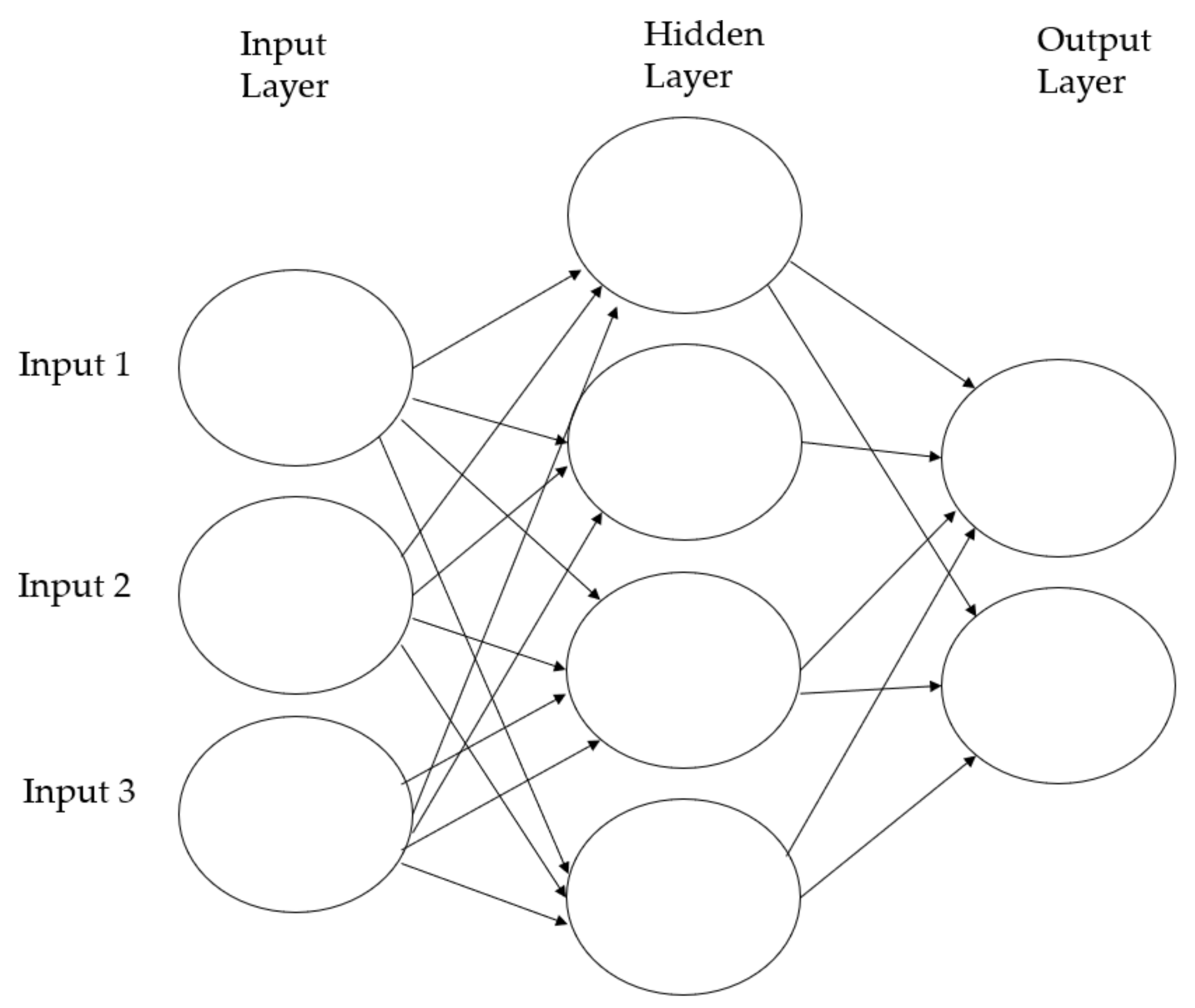
Figure 2. Single neuron.
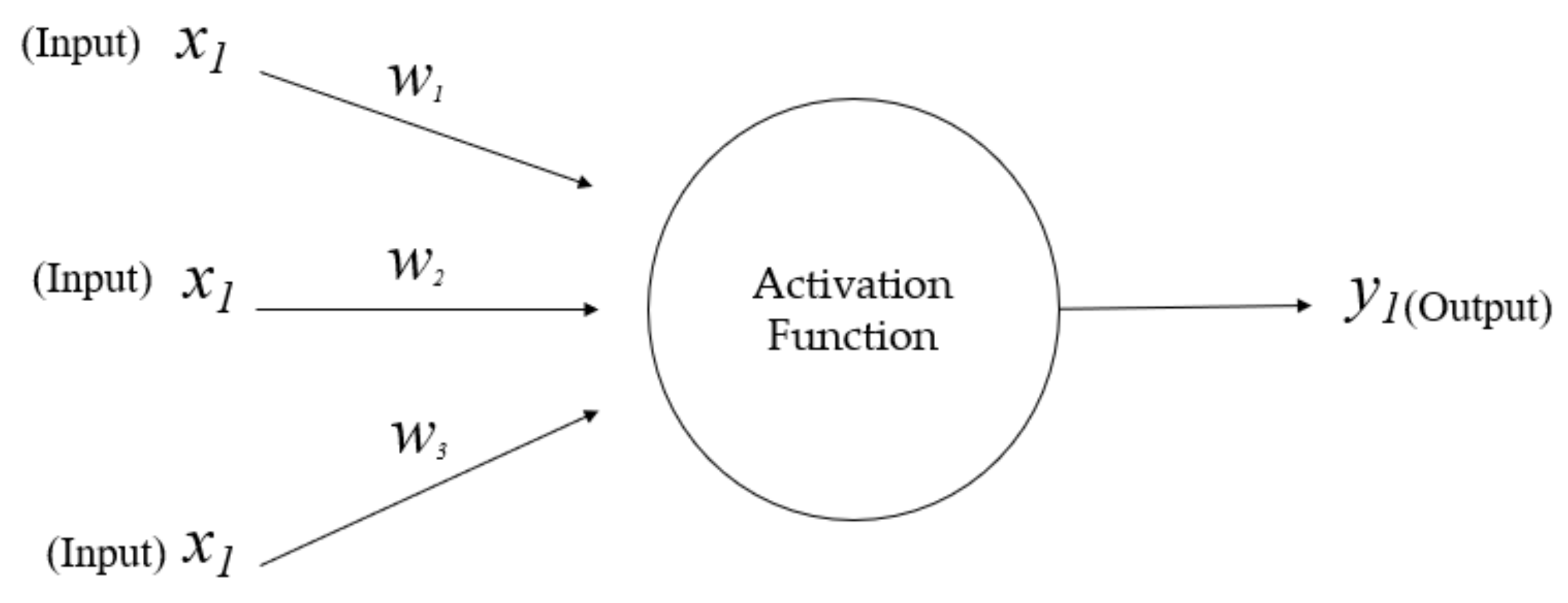
Figure 3. Inquiry model.
Effigy iii. Enquiry model.
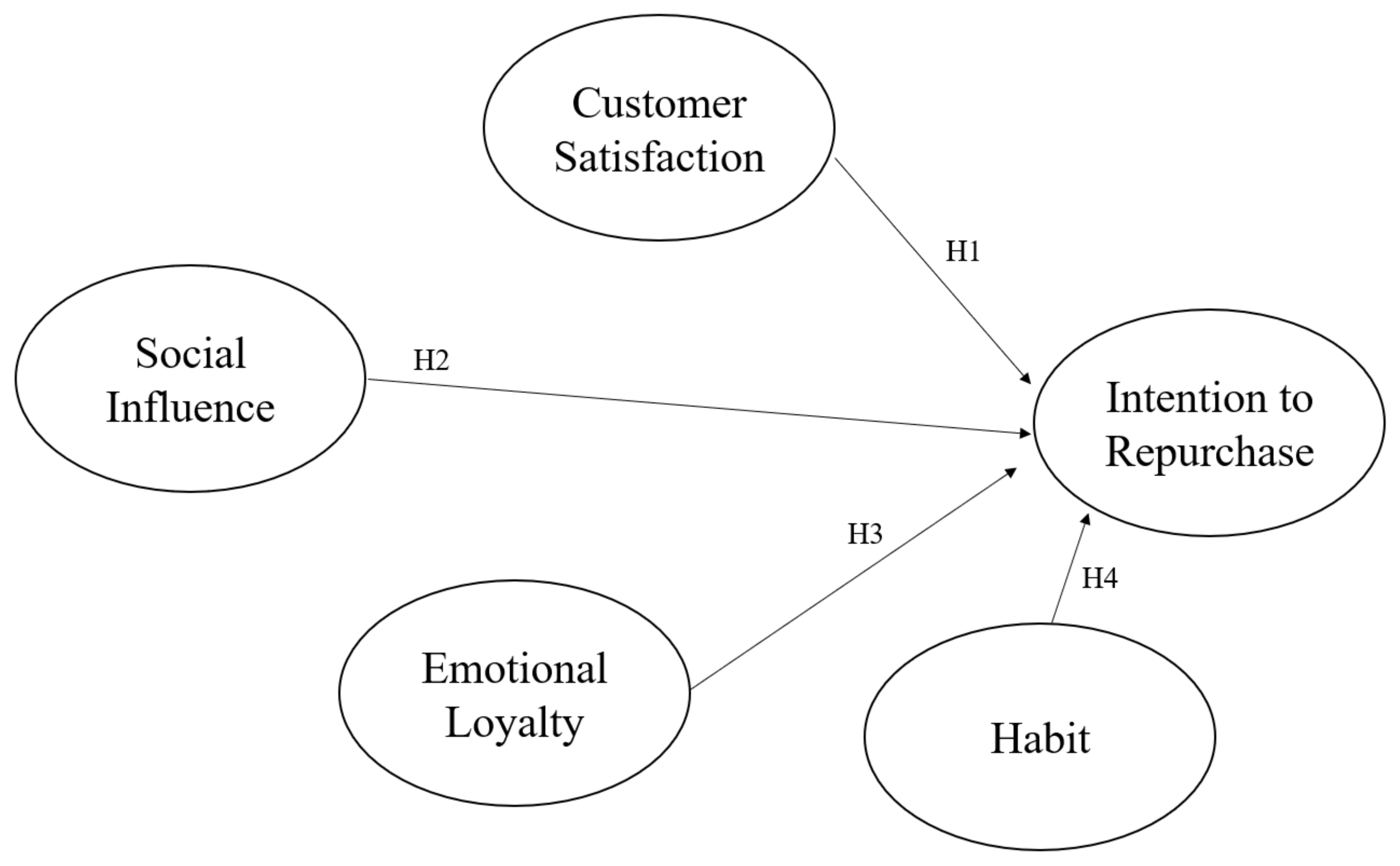
Table 1. Intention to repurchase by smartphone brand [i].
Table 1. Intention to repurchase past smartphone brand [ane].
| Case | Intention to Repurchase past Smartphone Make | |||||||
|---|---|---|---|---|---|---|---|---|
| Samsung Milky way | Apple tree IPhone | LG G/5/Ten | Other | Respond Refusal | ||||
| S/A/J | Note | |||||||
| Currently Used Smartphone Brand | Samsung Galaxy S/A/J | 423 | 61% | 4% | four% | seven% | ane% | 24% |
| Milky way Annotation | 137 | 6% | 67% | 6% | v% | 1% | fifteen% | |
| Apple iPhone | 161 | nine% | three% | 77% | iv% | eight% | ||
| LGG/5/Ten | 153 | xi% | iv% | iii% | 47% | 0% | 34% | |
Table 2. Measurement items.
Table two. Measurement items.
| Construct | Measurement Items | Related Studies |
|---|---|---|
| Social Influence |
| [82,83] |
| Consumer Satisfaction |
| [84,85,86] |
| Emotional Loyalty |
| [87] |
| Habit |
| [88] |
| Intention to Repurchase |
| [84,85,86] |
Tabular array 3. Descriptive statistics.
Table 3. Descriptive statistics.
| n | Minimum | Maximum | Mean | Standard Deviation | Variance | ||
|---|---|---|---|---|---|---|---|
| Statistic | Standard Error | ||||||
| Q4 | 390 | ane | 5 | 3.22 | 0.056 | 1.039 | 1.079 |
| Q5 | 390 | one | 5 | 3.ten | 0.060 | ane.114 | 1.240 |
| Q6 | 390 | 1 | 5 | 3.09 | 0.060 | ane.110 | 1.233 |
| Q8 | 390 | 1 | five | 3.82 | 0.042 | 0.786 | 0.617 |
| Q9 | 390 | 1 | v | 3.55 | 0.045 | 0.842 | 0.710 |
| Q10 | 390 | 1 | five | three.68 | 0.043 | 0.808 | 0.652 |
| Q11 | 390 | ane | 5 | 3.64 | 0.042 | 0.783 | 0.613 |
| Q13 | 390 | 1 | v | 3.66 | 0.042 | 0.790 | 0.624 |
| Q14 | 390 | 1 | 5 | 3.56 | 0.042 | 0.792 | 0.627 |
| Q15 | 390 | i | 5 | iii.65 | 0.042 | 0.783 | 0.614 |
| Q18 | 390 | 1 | 5 | 3.fifteen | 0.048 | 0.893 | 0.798 |
| Q19 | 390 | 1 | 5 | 2.65 | 0.050 | 0.934 | 0.873 |
| Q20 | 390 | one | 5 | 2.57 | 0.052 | 0.965 | 0.931 |
| Q25 | 390 | ane | v | 3.03 | 0.054 | 1.001 | 1.002 |
| Q28 | 390 | i | 5 | 2.98 | 0.054 | 1.003 | 1.005 |
| Q29 | 390 | 1 | five | three.18 | 0.052 | 0.972 | 0.944 |
| Q33 | 390 | i | 5 | iii.35 | 0.043 | 0.799 | 0.638 |
Table four. Analysis of survey respondents.
Table four. Analysis of survey respondents.
| Gender | ||||
| Frequency | Per centum | Valid Pct | Cumulative Percentage | |
| Man | 193 | 49.5 | 49.5 | 49.5 |
| Woman | 197 | fifty.v | 50.5 | 100.0 |
| Total | 390 | 100.0 | 100.0 | |
| Age | ||||
| Frequency | Percentage | Valid Pct | Cumulative Percent | |
| twenty southward | 112 | 28.vii | 28.7 | 28.7 |
| thirty due south | 177 | 45.iv | 45.four | 74.1 |
| 40 s | 52 | 13.3 | 13.3 | 87.iv |
| l s | 49 | 12.half-dozen | 12.6 | 100.0 |
| Total | 390 | 100.0 | 100.0 | |
| Number of Smartphone Repurchases | ||||
| Number of smartphone repurchases | Frequency | Percentage | Valid Pct | Cumulative Percentage |
| 2 | 29 | 7.5 | 7.5 | 7.v |
| 3 | 91 | 23.three | 23.3 | 30.7 |
| iv | 90 | 23.0 | 23.0 | 53.vii |
| 5 | 105 | 27.0 | 27.0 | 80.7 |
| half dozen | 33 | 8.3 | 8.3 | 89.1 |
| vii | 9 | 2.3 | 2.iii | 91.4 |
| 8 | 6 | 1.iv | 1.iv | 92.8 |
| nine | ane | 0.three | 0.3 | 93.1 |
| 10 | 20 | 5.ii | 5.2 | 98.three |
| 12 | one | 0.three | 0.three | 98.6 |
| 15 | three | 0.9 | 0.ix | 99.4 |
| sixteen | 1 | 0.3 | 0.three | 99.7 |
| 17 | one | 0.three | 0.three | 100.0 |
| Total | 390 | 100.0 | 100.0 | |
Table five. Kaiser–Meyer–Olkin (KMO) and Bartlett'south tests.
Table five. Kaiser–Meyer–Olkin (KMO) and Bartlett's tests.
| Kaiser–Meyer–Olkin Measure of Sampling Adequacy | 0.889 | |
| Bartlett's Test of Sphericity | Guess chi-foursquare | 5406.133 |
| df | 528 | |
| Sig. | 0.000 | |
Table 6. Cistron analysis.
Table 6. Factor analysis.
| Gene | Cronbach's Blastoff | ||||||
|---|---|---|---|---|---|---|---|
| 1 | ii | 3 | iv | 6 | |||
| Client Satisfaction | Q11 | 0.905 | 0.896 | ||||
| Q10 | 0.883 | ||||||
| Q9 | 0.831 | ||||||
| Q8 | 0.689 | ||||||
| Social Influence | Q6 | 0.871 | 0.784 | ||||
| Q5 | 0.716 | ||||||
| Q4 | 0.618 | ||||||
| Habit | Q29 | 0.709 | 0.708 | ||||
| Q28 | 0.661 | ||||||
| Q25 | 0.612 | ||||||
| Emotional Loyalty | Q20 | 0.817 | 0.8 | ||||
| Q19 | 0.745 | ||||||
| Q18 | 0.670 | ||||||
| Intention to Repurchase | Q14 | 0.808 | 0.848 | ||||
| Q15 | 0.773 | ||||||
| Q13 | 0.715 | ||||||
| Q33 | 0.604 | ||||||
Tabular array 7. Correlation analysis.
Table 7. Correlation analysis.
| Social Influence | Emotional Loyalty | Intention to Repurchase | Customer Satisfaction | ||
|---|---|---|---|---|---|
| Social Influence | Pearson correlation | 1 | 0.327 ** | 0.196 ** | 0.182 ** |
| Sig. (2-tailed) | 0.000 | 0.002 | 0.001 | ||
| northward | 390 | 390 | 390 | 390 | |
| Emotional Loyalty | Pearson correlation | 0.327 ** | 1 | 0.515 ** | 0.397 ** |
| Sig. (2-tailed) | 0.000 | 0.000 | 0.000 | ||
| due north | 390 | 390 | 390 | 390 | |
| Intention to Repurchase | Pearson correlation | 0.169 ** | 0.467 ** | one | 0.728 ** |
| Sig. (2-tailed) | 0.002 | 0.000 | 0.000 | ||
| northward | 390 | 390 | 390 | 390 | |
| Client Satisfaction | Pearson correlation | 0.182 ** | 0.397 ** | 0.728 ** | 1 |
| Sig. (2-tailed) | 0.001 | 0.000 | 0.000 | ||
| n | 390 | 390 | 390 | 390 | |
Table 8. Regression analysis.
Table viii. Regression analysis.
| Model | Variables Entered | Variables Removed | Method |
|---|---|---|---|
| one | Client satisfaction | Stepwise (criteria: probability of F to enter ≤ 0.050, probability of F to remove ≥ 0.100). | |
| ii | Emotional loyalty |
Table 9. Model summary.
| Model | R | R Square | Adjusted R Square | Standard Fault of the Guess | Change Statistics | Durbin–Watson | ||||
|---|---|---|---|---|---|---|---|---|---|---|
| R Square Change | F Modify | df1 | df2 | Sig. F Change | ||||||
| 1 | 0.728 a | 0.530 | 0.529 | 0.47442 | 0.530 | 390.500 | 1 | 346 | 0.000 | |
| 2 | 0.753 b | 0.568 | 0.565 | 0.45575 | 0.038 | 29.934 | 1 | 345 | 0.000 | ane.869 |
Tabular array 10. Coefficients a.
Table 10. Coefficients a.
| Model | Unstandardized Coefficients | Standardized Coefficients | t | Sig. | ||
|---|---|---|---|---|---|---|
| B | Standard Error | Beta | ||||
| 1 | (Abiding) | 0.996 | 0.135 | 7.360 | 0.000 | |
| Customer satisfaction | 0.716 | 0.036 | 0.728 | 19.761 | 0.000 | |
| 2 | (Constant) | 0.780 | 0.136 | 5.743 | 0.000 | |
| Customer satisfaction | 0.634 | 0.038 | 0.645 | 16.715 | 0.000 | |
| Emotional loyalty | 0.185 | 0.034 | 0.211 | 5.471 | 0.000 | |
Table 11. Example processing summary.
Table 11. Case processing summary.
| n | Percentage | ||
|---|---|---|---|
| Sample | Training | 283 | 72.75% |
| Testing | 106 | 27.25% | |
| Valid | 389 | 100.0% | |
| Excluded | one | ||
| Full | 390 | ||
Table 12. Network information. MLP—multilayer perceptron.
Table 12. Network information. MLP—multilayer perceptron.
| Input Layer | Factors | i | Client satisfaction |
| ii | Habit | ||
| 3 | Social influence | ||
| 4 | Emotional loyalty | ||
| Number of units | 51 | ||
| Subconscious Layer(s) | Number of hidden layers | 1 | |
| Number of units in hidden layer 1a | 8 | ||
| Activation function | Sigmoid | ||
| Output Layer(south) | Dependent variables | 1 | Predicted value for MLP predicted value |
| Number of units | half dozen | ||
| Activation function | Softmax | ||
| Error role | Cantankerous-entropy | ||
Tabular array 13. Model summary a.
Table 13. Model summary a.
| Training | Cross-entropy error | 13.233 |
| Percent incorrect predictions | 0.0% | |
| Stopping rule used | ane consecutive step(due south) with no decrease in error a | |
| Testing | Cross-entropy mistake | 50.596 |
| Percentage wrong predictions | seven.4% |
Tabular array fourteen. Regression analysis.
Tabular array fourteen. Regression analysis.
| Model | Variables Entered | Variables Removed | Method |
|---|---|---|---|
| 1 | Customer satisfaction | Stepwise (criteria: probability of F to enter ≤ 0.050, probability of F to remove ≥ 0.100). | |
| 2 | Emotional loyalty | ||
| three | Social influence |
Table 15. Model summary.
| Model | R | R Foursquare | Adapted R Square | Standard Error of the Gauge | Modify Statistics | Durbin–Watson | ||||
|---|---|---|---|---|---|---|---|---|---|---|
| R Square Change | F Change | df1 | df2 | Sig. F Modify | ||||||
| 1 | 0.814 a | 0.663 | 0.663 | 0.34972 | 0.663 | 1429.476 | 1 | 726 | 0.000 | |
| 2 | 0.831 b | 0.690 | 0.690 | 0.33463 | 0.028 | 65.913 | 1 | 725 | 0.000 | |
| 3 | 0.835 c | 0.696 | 0.696 | 0.33155 | 0.006 | 14.557 | ane | 724 | 0.000 | 1.869 |
Table xvi. Coefficients a.
Table 16. Coefficients a.
| Model | Unstandardized Coefficients | Standardized Coefficients | t | Sig. | Variance Inflation Factors (VIF) | ||
|---|---|---|---|---|---|---|---|
| B | Standard Error | Beta | |||||
| 1 | (Abiding) | 1.128 | 0.070 | 16.190 | 0.000 | ||
| Client satisfaction | 0.698 | 0.018 | 0.814 | 37.808 | 0.000 | 1.000 | |
| 2 | (Constant) | 0.892 | 0.073 | 12.260 | 0.000 | ||
| Customer satisfaction | 0.636 | 0.019 | 0.742 | 32.982 | 0.000 | 1.188 | |
| Emotional loyalty | 0.145 | 0.018 | 0.183 | 8.119 | 0.000 | 1.188 | |
| 3 | (Constant) | 0.805 | 0.076 | 10.646 | 0.000 | ||
| Customer satisfaction | 0.621 | 0.020 | 0.724 | 31.832 | 0.000 | ane.238 | |
| Emotional loyalty | 0.125 | 0.018 | 0.158 | 6.785 | 0.000 | one.290 | |
| Social influence | 0.063 | 0.017 | 0.086 | 3.815 | 0.000 | 1.211 | |
Table 17. Instance processing summary.
Tabular array 17. Example processing summary.
| northward | Percentage | ||
|---|---|---|---|
| Sample | Training | 283 | 72.75% |
| Testing | 106 | 27.25% | |
| Valid | 369 | 389 | |
| Excluded | i | 1 | |
| Full | 370 | 390 | |
Table 18. Network information.
Table xviii. Network information.
| Input Layer | Factors | 1 | Customer satisfaction |
| 2 | Habit | ||
| 3 | Social influence | ||
| iv | Emotional loyalty | ||
| Number of units | 48 | ||
| Hidden Layer(s) | Number of hidden layers | 2 | |
| Number of units in hidden layer 1 a | ix | ||
| Number of units in subconscious layer 2 a | 7 | ||
| Activation function | Sigmoid | ||
| Output Layer(southward) | Dependent variables | 1 | Predicted value for MLP predicted value |
| Number of units | v | ||
| Activation function | Softmax | ||
| Fault role | Cantankerous-entropy | ||
Table 19. Model summary.
| Training | Cross-entropy fault | 13.272 |
| Percentage wrong predictions | 0.0% | |
| Stopping rule used | 1 consecutive step(south) with no subtract in error a | |
| Testing | Cross-entropy error | thirty.578 |
| Percentage incorrect predictions | half dozen.8% |
Table 20. Regression analysis.
Tabular array xx. Regression analysis.
| Model | Variables Entered | Variables Removed | Method |
|---|---|---|---|
| 1 | Client satisfaction | Stepwise (criteria: probability of F to enter ≤ 0.050, probability of F to remove ≥ 0.100). | |
| 2 | Emotional loyalty | ||
| iii | Social influence |
Table 21. Model summary.
| Model | R | R Square | Adjusted R Square | Standard Fault of the Estimate | Change Statistics | Durbin–Watson | ||||
|---|---|---|---|---|---|---|---|---|---|---|
| R Foursquare Change | F Change | df1 | df2 | Sig. F Change | ||||||
| 1 | 0.843 a | 0.710 | 0.710 | 0.32800 | 0.710 | 1754.999 | ane | 726 | 0.000 | |
| 2 | 0.855 b | 0.731 | 0.731 | 0.31626 | 0.021 | 55.218 | 1 | 725 | 0.000 | |
| 3 | 0.859 c | 0.737 | 0.737 | 0.31310 | 0.006 | 15.515 | 1 | 724 | 0.000 | 1.869 |
Table 22. Coefficients a.
Table 22. Coefficients a.
| Model | Unstandardized Coefficients | Standardized Coefficients | t | Sig. | ||
|---|---|---|---|---|---|---|
| B | Standard Mistake | Beta | ||||
| ane | (Constant) | 0.836 | 0.071 | eleven.801 | 0.000 | |
| Customer satisfaction | 0.783 | 0.019 | 0.843 | 41.893 | 0.000 | |
| 2 | (Constant) | 0.646 | 0.073 | 8.868 | 0.000 | |
| Client satisfaction | 0.724 | 0.020 | 0.779 | 36.741 | 0.000 | |
| Emotional loyalty | 0.128 | 0.017 | 0.158 | seven.431 | 0.000 | |
| 3 | (Abiding) | 0.558 | 0.076 | 7.380 | 0.000 | |
| Client satisfaction | 0.710 | 0.020 | 0.764 | 35.834 | 0.000 | |
| Emotional loyalty | 0.108 | 0.018 | 0.133 | 6.070 | 0.000 | |
| Social influence | 0.062 | 0.016 | 0.083 | iii.939 | 0.000 | |
Tabular array 23. Analysis and comparison of research models.
Table 23. Analysis and comparison of research models.
| Enquiry Hypothesis | Research Model No. (1) | Research Model No. (2) | Research Model No. (3) |
|---|---|---|---|
| Consumer satisfaction positively impacts intention to repurchase (H1) | Accept | Accept | Accept |
| Social influence positively impacts intention to repurchase (H2) | Reject | Accept | Accept |
| Emotional loyalty positively impacts intention to repurchase (H3) | Accept | Accept | Accept |
| Consumer addiction positively impacts intention to repurchase (H4) | Decline | Turn down | Reject |
Table 24. Analysis and comparing of research models. RMSE—root-mean-square error.
Table 24. Analysis and comparing of research models. RMSE—root-mean-square error.
| Inquiry Model No. | 1 | 2 | 3 |
|---|---|---|---|
| Analysis method | Regression analysis | Regression analysis (number of hidden layers (ane)) | Regression analysis (number of hidden layers (2)) |
| R Square (0.568) | R Foursquare (0.696) | R Square (0.736) | |
| RMSE (0.456) | RMSE (0.332) | RMSE (0.313) | |
| (Constant) | 0.780 | 0.805 | 0.558 |
| Satisfaction | 0.634 | 0.621 | 0.710 |
| Emotional loyalty | 0.185 | 0.125 | 0.108 |
| Social influence | - | 0.063 | 0.062 |
© 2020 past the author. Licensee MDPI, Basel, Switzerland. This article is an open access article distributed nether the terms and atmospheric condition of the Creative Commons Attribution (CC By) license (http://creativecommons.org/licenses/by/4.0/).
Source: https://www.mdpi.com/2078-2489/11/9/400/htm
0 Response to "Conspicuous Consumption in the Market for Smartphones Journal Article Peer Reviewed"
Post a Comment