Frida Kahlo Belonging Art Exhibit in the Case Azul
Frida Kahlo: Making Her Self Up
Clothing and intimate objects belonging to Frida Kahlo—one of the world's most recognised and significant artists—were sealed for fifty years in trunks and hidden storage spaces in Casa Azul (at present Museo Frida Kahlo), her babyhood abode in a leafy suburb of Mexico City. In this exclusive review for Comprehend, Denna Jones explores objects from this stash on view in the V&A exhibition 'Frida Kahlo: Making Her Self Upwardly'.
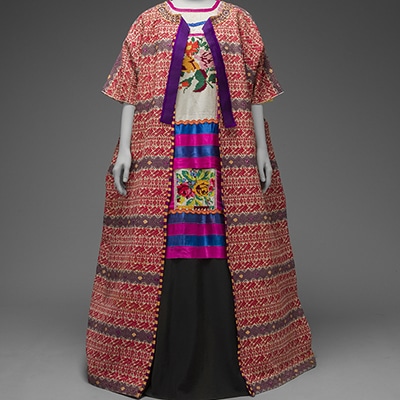
'Frida Kahlo: Making Her Self Up' at London'south V&A museum until 4 Nov 2018 paints an intimate portrait of the celebrated Mexican artist, highlighting the style she employed indigenous costume and textiles both to celebrate her cultural heritage and disguise her physical suffering. Denna Jones introduces the current exhibition.
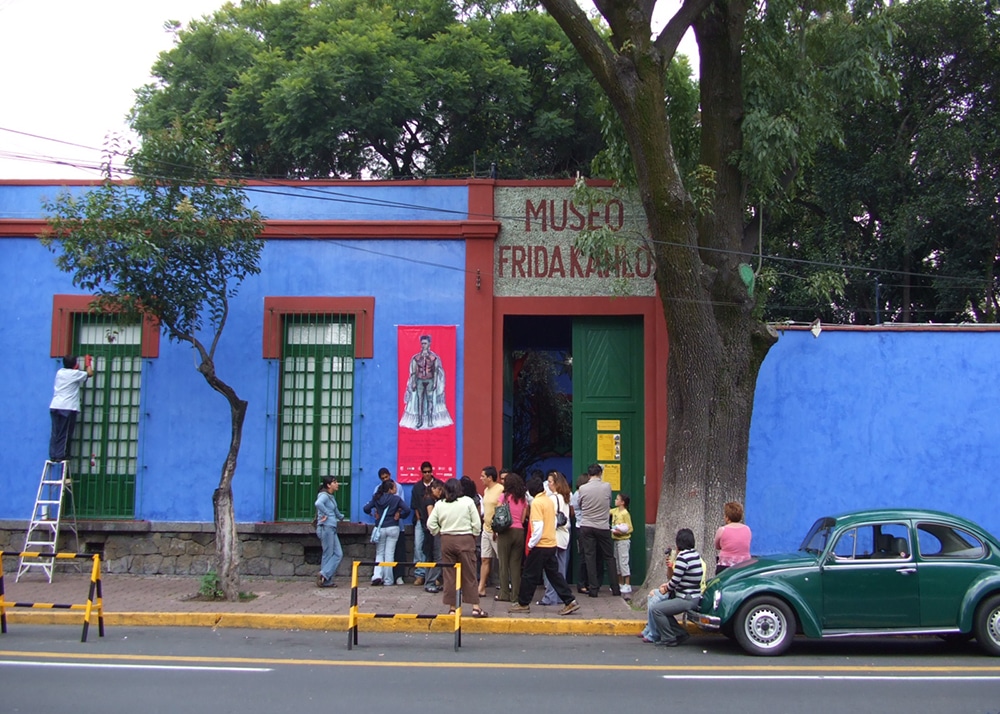
Clothing and intimate objects belonging to Frida Kahlo—ane of the world'south most recognised and pregnant artists—were sealed for l years in trunks and hidden storage spaces in Casa Azul (now Museo Frida Kahlo), her babyhood home in a leafy suburb of Mexico Urban center. Never-before-seen outside Mexico, objects from this stash are on view at the V&A exhibition 'Frida Kahlo: Making Her Cocky Upwards'until iv November 2018. Collectively the objects paint a portrait of how Kahlo used her body literally through her dress and make-upwardly as both performance and homage to ethnic Mexican cultures, and figuratively through her art, every bit a public announcement of her hurting, persona, politics, and experiences.
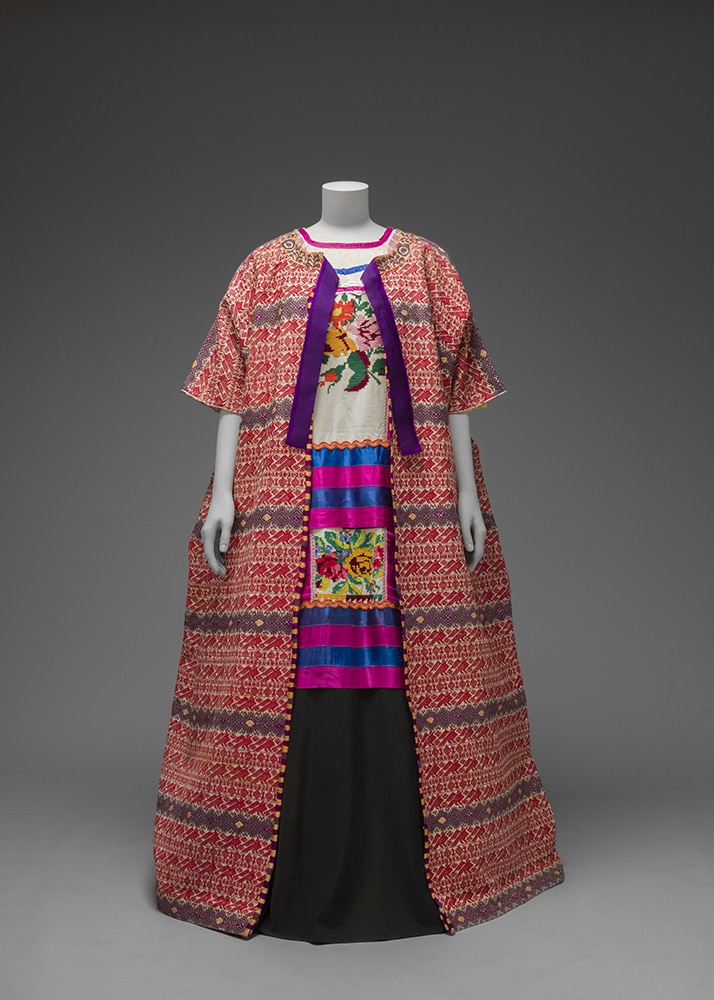
Kahlo's identity as 'mestizo' (mixed race) shaped her life and art and doubtlessly fuelled her attraction to multiple dualities and carefully curated and changeable physical identities. Evidence of these dualities—including bisexuality—are seeded throughout the exhibition. Girl of a German immigrant begetter and a Spanish-Mexican mother, Kahlo'south exuberant and unique artistic and avant-garde style of dress included incorporation of the native wearing apparel of ethnic cultures of Fundamental America—particularly from her mother's Oaxacan Tejuantepec civilisation. Kahlo adopted embroideredhuipileswith long skirts renowned as the costume of strong, independentTejuanas,and theresplandor—a ceremonial Tejuantepec confront-framing lace headdress—augmented with whatever tropes of western dress and make-up she felt enhanced her atypical style.
Kahlo defied convention and expectations in multiple means. The exhibition includes an elaborately embroidered ruby-red leather prosthetic kicking to accommodate her below-the-knee amputation of one leg in 1953. The duality of amputation in tandem with her 'complete' leg was amplified by Kahlo with tiny sleigh bells attached to the laces of the prosthesis to 'announce' her inflow in a room. Rather than tweezing her eyebrows into dissever elements, she used Revlon's 'Ebony' countenance pencil—on display along with her 'Raven Red' boom varnish and 'Everything's Rosy' lipstick—to heighten her declarative monobrow.
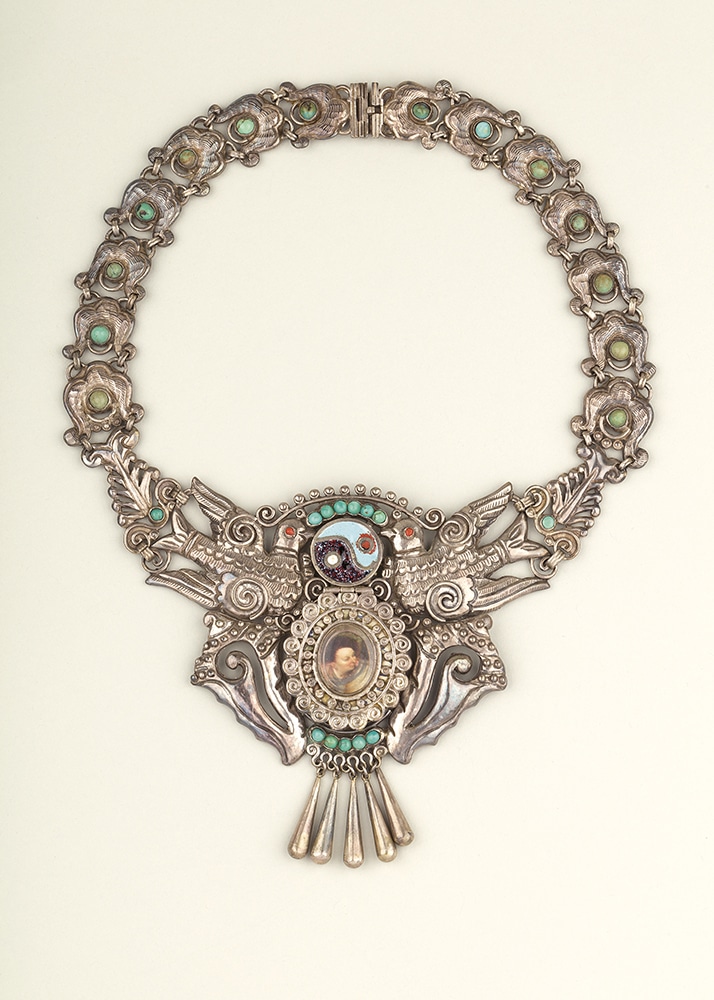
Display cases in one of the exhibition's main rooms are full-calibration adaptations of her iv-poster tester bed from Casa Azul. Objects including jewellery, cosmetics, photographs and medical objects are arrayed on the 'beds'. The life-altering consequences of her streetcar accident anile 18 meant she endured multiple surgeries. Prolonged post-op recuperations dogged her life turning her unmarried bed into her studio and staging post for self-expression. The bed's elevated 'tester'—a flat panel horizontal to the mattress supported by the iv posts—provided the infinite for Kahlo to affix a mirror to reflect her body. She used this ready-upward to pigment cocky-portraits on canvas, simply also to paint the surfaces of the medical corsets that imprisoned her fractured body for about of her life, several of which are in the exhibition.
Kahlo'south international recognition as a blue-chip artist and cultural touchstone is undeniable. The public's want to identify with her story and art is insatiable. Evidence of her cultural currency is everywhere. Kid-cool cult skate company RipNDip appropriated Kahlo'due south Self Portrait With Monkeys and replaced her monkeys with their white cat mascot Lord Nermal on products from backpacks to Antipodal sneakers. Before she died in 1954, Kahlo wrote that she hoped 'never to return' to this world. What she didn't realise is that the eternal cult of Kahlo ways she never really left.
Frida Kahlo: Making Her Self Upwardly, Victoria & Albert Museum, London, until 4 Nov 2018.
Related Manufactures
Source: https://www.cover-magazine.com/2018/09/24/frida-kahlo-making-her-self-up/
0 Response to "Frida Kahlo Belonging Art Exhibit in the Case Azul"
Post a Comment